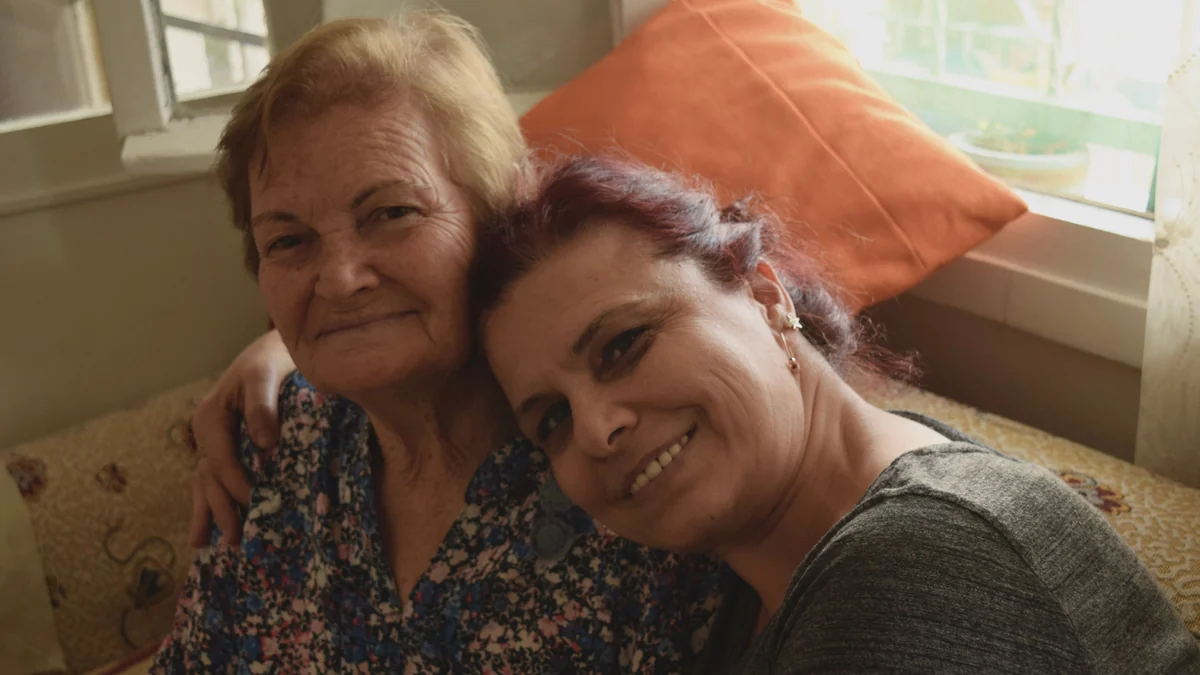

Start planning before a crisis makes the decision for you. There is rarely one dramatic moment. Small signs build over months, such as unopened mail, milk weeks past its date, or a parent who now grips the counter to cross the kitchen and seems less sure of herself than she did in the spring.
Families who plan before a fall have more choices than families who plan from a hospital bed. In Indiana, those choices can include Medicaid-paid help at home, which takes time to set up.
Why not wait for a clear crisis?
Waiting is risky because falls are common and often go unreported. More than one in four older adults fall each year, and less than half tell their doctor.1
In Indiana, 687 adults 65 and older died from unintentional falls in 2023, a rate of 58.3 per 100,000.2 The Indiana Department of Health counted more than 89,000 fall-related injuries among Hoosiers 65 and older that year, and the state's older adult fall death rate rose more than 60% between 2014 and 2023.3
For someone who lives alone, a fall can mean hours on the floor before anyone knows. A hospital stay that follows can end in a facility if no plan for home is in place.
What are the signs an elderly parent can't live alone?
The main signs are missed or doubled medications, skipped meals or weight loss, falls or near falls, unpaid bills, getting lost on familiar routes and pulling away from friends. A pattern over weeks matters more than one bad day. Any single item is easy to explain away. Several together, getting worse over a few months, show that the current setup has stopped working.
| Area | Signs to watch | What it may point to |
|---|---|---|
| Daily living | Same clothes for days, skipped baths, weight loss, spoiled food | Trouble with bathing, dressing or cooking |
| Memory and thinking | Missed or doubled medications, repeated questions, unpaid bills, getting lost on familiar routes, stove left on | Possible early dementia, worth a doctor visit |
| The house | Piles of mail, clutter on walkways, a once-tidy home that is not | Housework has become too much |
| Mobility | Holding walls and furniture, new bruises, a fall they played down | Fall risk |
| Mood | Dropping friends, church or hobbies, little interest in anything | Depression or isolation, both treatable |
| You | You cover more every week and are falling behind at work or home | The current setup is running on your labor |
Swipe the table sideways to see every column.
Memory changes deserve a closer look. Trouble paying bills, getting lost in a familiar place and repeating the same question are among the Alzheimer's Association's early warning signs of dementia.4 Ordinary forgetfulness, like misplacing keys now and then, is different.
Mood matters as much as memory. Depression is common in older adults, and the National Institute on Aging stresses that it is not a normal part of aging and can be treated.5 Pulling away from friends can also be a sign of loneliness, which we cover in our guide to loneliness in older adults.
A pattern over weeks matters more than one bad day.
Fear counts as a sign too. In national survey data from 2011, 45% of 5,950 adults 65 and older living in the community had fallen, feared falling or both.6 A parent who stops going out because she is afraid of falling may lose strength faster.

Is your own exhaustion a sign?
Yes. Families often overlook it.
If you drive across town twice a day, spend your lunch break on the phone with her pharmacy and lie awake wondering whether she took her pills, that is part of the picture. If your parent's independence depends on you skipping sleep and work, the current setup has stopped working for both of you. Tell the rest of the family plainly, so the plan can change.
What can you do before considering a move?
Match in-home help to the gap the signs point to. Most families find more options between living alone without help and moving to a facility than they expected.
If the house and errands are slipping first, Home and Community Assistance may cover cleaning, laundry, meal preparation, shopping and similar household tasks.7 It is often the first service a parent will accept, because nobody is helping them bathe.
When personal care is slipping, such as bathing, dressing, getting to the toilet or getting out of a chair, Attendant Care may send a trained caregiver for set hours.7 A relative such as an adult child can also be the paid Attendant Care worker.8
A family member who already lives with your parent, or is about to move in, may be paid a daily stipend through an agency under Structured Family Caregiving (SFC), which also includes training and up to 15 days of unskilled respite a year.9 A spouse can be the caregiver for this one.9
Each of these is a Medicaid waiver service for people who meet the financial rules and a nursing facility level of care, through PathWays for Aging (60 and older) or Health and Wellness (59 and younger).10 Your parent's case manager or service coordinator authorizes the service and hours. Attendant Care and Home and Community Assistance cannot be paid in the same calendar month as Structured Family Caregiving.7 For a wider view, see our guide to help options for Indiana families caring for a parent.
Outside Medicaid, look at grab bars, brighter lighting and stair rails, which the National Institute on Aging recommends room by room.11 A medical alert device, an adult day program and your Area Agency on Aging's local services can fill other gaps.12 Home Run Family Care provides all three waiver services above.
How do you talk to a parent about needing help?
Start with what you have seen, in plain words, such as "I noticed the bills stacking up, and you mentioned a fall last week." Ask what worries your parent, and listen for the fear underneath, which is usually losing the house or losing control. Frame every idea as a way to stay home, as in "What would make it easier to keep living here?"
Offer one small step, such as a few hours of help with housework or a safety check of the bathroom, and let your parent choose the day. Expect several conversations. Most older adults want to stay where they are, and in AARP's 2024 survey, 75% of adults 50 and older said they want to stay in their current home.13 The National Institute on Aging's guide to aging in place suggests planning ahead for the help that makes that possible.14
If your parent has memory problems, bring the concern to the doctor first and ask for a cognitive check at the next visit. If your parent refuses all help and is at real risk, Indiana Adult Protective Services takes reports on its state hotline, 800-992-6978.15
When is living alone unsafe even with help?
Living alone is unsafe even with help when safety cannot be kept with support in place. Examples are wandering, repeated falls after the house has been changed, or a stove left on with no one reliably there. At that point the right answer may be a higher level of care than home can safely give.
Medical needs can also outgrow home, as with complex wound care or a condition that needs round-the-clock clinical monitoring. The same is true when the physical or behavioral demands exceed what one household can manage, or when the caregiver's own health is collapsing and no added help can be arranged. Choosing more care at that point protects your parent. Our guide on how to decide about a nursing home walks through that choice, and if memory loss is the main concern, see caring for a parent with dementia at home.
What should you do this week?
Write down the signs you have seen, with dates, and book a doctor visit for a fall-risk and memory screening. The Centers for Disease Control and Prevention (CDC) runs STEADI, a program that gives doctors a standard way to check fall risk in older adults.16
Call your Area Agency on Aging at 800-713-9023 to ask about in-home services and a Medicaid waiver referral.12 Make sure a durable power of attorney is signed while your parent can still sign it. Waiver waitlists and assessments take time, so a call made now can matter a great deal later.
Questions families ask
How do I know if my elderly parent is safe living alone?
Look for patterns across several areas: missed medications, skipped meals or weight loss, falls or near falls, unpaid bills, getting lost on familiar routes and withdrawing from friends. One sign alone may mean little. Several, getting worse over weeks or months, usually mean your parent needs more help at home or a different setup.
What should I do if my parent keeps falling?
Get a medical check first, since medications, vision, blood pressure and weakness all raise fall risk. Ask the doctor about a fall-risk screening and physical therapy. At home, add grab bars, stair lights and nonslip strips, remove loose rugs, and consider a medical alert device if your parent lives alone.
Can my parent get paid help at home in Indiana?
Possibly. If your parent qualifies for Medicaid and needs a nursing facility level of care, an Indiana waiver can pay for Home and Community Assistance, Attendant Care or Structured Family Caregiving. PathWays for Aging covers people 60 and older, Health and Wellness covers people 59 and younger, and your Area Agency on Aging is the place to start.
What if my parent refuses help?
Start small and frame help as a way to stay home. Offer one task, like housework twice a week, let your parent choose the person or day, and bring in the doctor, whose advice often carries more weight. If your parent is in danger and refuses all help, contact Indiana Adult Protective Services at 800-992-6978.
Is forgetfulness a sign my parent shouldn't live alone?
Not by itself. Ordinary forgetfulness, like misplacing keys now and then, is common with age. Missing medications, leaving the stove on, getting lost on familiar roads or falling for scams are different, because those can be early signs of dementia and safety risks. Ask the doctor for a memory evaluation.
Sources
Numbers in the text link to these sources. Links open in a new tab.
- 1CDC. Older Adult Falls Data: Facts and Stats (2024)↩
- 2CDC National Center for Health Statistics. Data Brief 532: Unintentional Fall Deaths in Adults Age 65 and Older, United States, 2023 (2025)↩
- 3Indiana Department of Health. Older Adult Falls Special Emphasis Report (2025)↩
- 4Alzheimer's Association. 10 Early Signs and Symptoms of Alzheimer's and Dementia (2025)↩
- 5National Institute on Aging. Depression and Older Adults (2025)↩
- 6Frontiers in Public Health. Liu K et al., Falls, fear of falling and functional limitations among U.S. older adults (NHATS) (2023)↩
- 7Indiana Health Coverage Programs. Home- and Community-Based Services Waivers provider reference module (2026)↩
- 8The Arc of Indiana. Who Can Be Paid for What: All Waivers (2026)↩
- 9Indiana FSSA. Structured Family Caregiving: Frequently Asked Questions for Families (2024)↩
- 10Indiana FSSA. Indiana PathWays for Aging (2026)↩
- 11National Institute on Aging. Preventing Falls at Home: Room by Room (2024)↩
- 12Indiana FSSA. Area Agencies on Aging (2026)↩
- 13AARP. 2024 Home and Community Preferences Survey (2024)↩
- 14National Institute on Aging. Aging in Place: Growing Older at Home (2023)↩
- 15Indiana FSSA. Adult Protective Services (2026)↩
- 16CDC. STEADI: Older Adult Fall Prevention (2024)↩
This article is general information for Indiana families. It is not medical, legal or tax advice. Program rules change, so confirm details with FSSA, your case manager or a qualified professional. Home Run Family Care is a brand of Safekeeping Homecare LLC, an Indiana-licensed Personal Care Services Agency currently licensed under the name Safekeeping Homecare.